
Bonus Buy Slots UK: Features, Costs and Demo Play
 Available in GB
A practical look at how buyable features work, their costs, demo play, volatility and account controls in Great Britain.

Table of Contents
- Try the Bonus-Buy Mechanic in Demo Mode
- What to Check Before Using a Casino’s Bonus Buy
- How a Slot’s Buyable Bonus Feature Works
- What to Look for in Slots with a Buyable Bonus
- Bonus-Buy Slots and the Cost of a Feature
- Free Play, Real Stakes and Great Britain’s Slot Limits
- Playing Online: Limits and Account Controls
- Game Volatility and What a Session Can Feel Like
- Which Slot Features Can You Buy Into?
- Where Bonus Buys Fit—and Where They Do Not
Try the Bonus-Buy Mechanic in Demo Mode
A demo is a way to inspect a slot’s bonus-buy option without staking real money. It is useful when you want to see how the feature is presented, where its controls appear and what happens to the game screen when you select it. You can do this without treating a practice session as a route to a cash win: demo credits are fake, and demo play awards no payouts.
Start by opening the slot in its demo or free-play mode. The wording varies between games and casinos, but the important point is to confirm that the game is not asking you to place real-money bets. Some demos open directly; others show a choice between practice and real-money play. Select practice, then allow the game to load before looking for the bonus-buy control.
The option may sit in a menu, alongside the ordinary spin controls, or in a panel that appears after the game has started. Read the labels rather than assuming that a button with a distinctive symbol is the feature you are looking for. If you cannot find it, check the game’s own information panel or help screen. A demo may not include every feature available in the real-money version, so the absence of a visible option does not necessarily mean the slot has no buyable bonus.
When choosing a UK site for bonus buy slots, you should check the details that matter to your play and withdrawals. These verdicts note the payout-speed information available for each operator.
Payout speed: 1-3 business days EvoSpin lists a payout speed of 1–3 business days. You can use this as one detail to consider when reviewing the site.
Payout speed: 1-3 business days Amunbet lists a payout speed of 1–3 business days. You can factor this into your review of the site.
Payout speed: 1-3 business days Jetsetspins lists a payout speed of 1–3 business days. You can consider this when checking the site’s withdrawal information.
Payout speed: 1-3 business days Britsino lists a payout speed of 1–3 business days. You can take this into account when assessing the site.
Payout speed: 1-3 business days NightWin lists a payout speed of 1–3 business days. You can use this as a reference when reviewing its payout information.
Payout speed: 1-3 business days WinBeast lists a payout speed of 1–3 business days. You can consider this detail as part of your site review.
Payout speed: 1-3 business days BeOnBet lists a payout speed of 1–3 business days. You can factor that information into your assessment.
Payout speed: 1-3 business days SlotoSport lists a payout speed of 1–3 business days. You can bear this in mind when checking the site’s terms.
Payout speed: 1-3 business days SpinFormula lists a payout speed of 1–3 business days. You can consider this information when reviewing the site.
Payout speed: 1-3 business days x3bet lists a payout speed of 1–3 business days. You can use this as one point of reference when assessing the site.
Once you find the control, use the demo to inspect the sequence at your own pace. Notice what the game displays before you confirm a choice, whether an additional prompt appears and how the screen changes afterwards. If the demo lets you return to the main game, you can compare the feature screen with the ordinary play screen. The purpose is to understand the interface, not to infer what a real-money session would pay.
Pay attention to the information the game makes visible. A price or other condition may be shown near the control or in a confirmation panel; take time to read it rather than tapping through. In demo mode, any displayed cost is handled using the game’s fake credits. It is not a real charge, and a demo balance is not money you can withdraw. Equally, seeing a feature play out in practice does not create a claim to a payout.
If the game has several ways to interact with its reels, the demo can help you observe how the controls are arranged. For instance, a five-reel slot may apply a bet across all five reels. You can use the practice screen to see where the game presents its settings and how they appear alongside the bonus-buy option. This is an interface check, not a reason to assume that every slot uses the same layout or betting arrangement.


Keep the session focused. Open the information panel, locate the relevant control, read the on-screen prompts and observe the result of selecting it. If the game does not let you test the option in demo mode, you can still review the available help text, but do not switch into real-money play simply to see what the demo leaves out. A practice version is useful only if it lets you explore without wagering.
A demo can also make it easier to slow down and read. When real money is involved, a decision about a feature can feel immediate; in practice mode, you can pause, check what is displayed and decide whether the controls are clear to you. That does not make the demonstration a prediction of future results. The sequence you see is a sample of gameplay, not evidence that the same outcome will happen later.
The distinction matters when looking for bonus-buy demo slots in the UK. A demo offers a no-stake way to become familiar with a game’s presentation, but it is not a version that pays cash. Real-money play is different: stakes are made with money, and any payout depends on the real-money game’s result and applicable terms. A practice balance cannot be transferred into a gambling account or converted into winnings.
Attention: A demo session is a no-stake way to become familiar with a game’s presentation, but it is not a version that pays cash and its fake credits cannot be converted into winnings.
Use the demo as a screening step, not as proof that a feature is worthwhile. It can tell you whether the option is easy to find and whether you understand the prompts. It cannot establish what you would win, how often a particular result will occur or whether a real-money session will resemble the sample you saw. If the controls remain unclear, leaving the game is a sounder response than guessing.
In Great Britain, the UK Gambling Commission regulates commercial gambling, including remote gambling offered to consumers, wherever the operator’s key equipment is located. That is the regulatory setting for real-money online casino play; it does not turn a demo into wagering or give its fake credits a cash value. Keep that distinction in view while exploring: practice can show you how a bonus-buy feature is presented, but it produces no real-money payout.
What to Check Before Using a Casino’s Bonus Buy
A casino’s game catalogue is the first place to check whether a slot offers a buyable bonus. Search the lobby for the game, then open its information panel or help screen and look for a clear description of the feature. A title’s presence in the catalogue does not, by itself, confirm that the feature is available to you: availability can depend on the game version, the operator and the account you are using.
Check the game from the account you intend to play with, rather than relying on a general page or an old review. If the casino has filters or a search function, use them to narrow the catalogue, but treat any label such as “bonus buy” as a starting point rather than a full explanation. The game’s own information should confirm whether the option is present. If the wording is unclear, ask the operator’s customer support before depositing or starting play.

Read the terms attached to the feature
Before using a buy option, read the game rules and any terms the casino provides alongside it. Confirm what the stated price refers to, how it is charged to your balance and whether the casino explains any restrictions that apply. Do not assume that a short lobby description contains the complete terms. If the rules are difficult to find, contradictory or silent on an important point, pause and request clarification.
Keep the casino’s promotional offers separate from the slot’s buyable feature. A promotional bonus may come with its own eligibility rules and conditions, while a game feature is described in the slot’s rules. A specialist review reports that casino bonuses can have a 48-hour lifespan, but that is not a substitute for checking the offer terms shown by the operator. Confirm when an offer begins and ends, and what conditions apply before accepting it; do not assume that an advertised bonus changes the rules of the game.
Also check which balance will be used. An account may display cash funds and promotional funds separately, and the terms should make clear whether a particular feature can be used with either. If the casino does not explain how the transaction will be recorded, ask before proceeding. A transaction history that identifies the game and the amount charged can help you review what happened later.
Before Using a Bonus Buy
- Search the casino lobby and check the game’s information panel for the feature.
- Read the game rules and the casino’s terms attached to the buy option.
- Confirm the stated price and how it will be charged to your balance.
- Verify which balance (cash or promotional) will be used for the purchase.
- Check that the operator holds a valid UK Gambling Commission licence.
Check who operates the site
For real-money gambling in Great Britain, the operator must hold the relevant UK Gambling Commission licence. Check the operator’s legal name and licence details against the Commission’s public register before depositing; a familiar brand name alone is not enough to establish who is responsible for the account. A casino serving British customers from another country is still required to hold the relevant British licence.
Look for the operator’s terms, privacy information and customer-support route, and make sure they identify the business responsible for your account. UK-licensed casinos must provide an internal complaints process and access to an approved Alternative Dispute Resolution service. Those details matter if a balance, transaction or game-access issue cannot be resolved through ordinary support. Save relevant terms or correspondence if you need to refer to them later.
Check the payment rules before adding funds. UK-licensed casinos cannot accept credit cards for gambling, including credit-card funding routed through a money service business; they also cannot accept wallet payments when the wallet allows credit-card funds to be used for gambling. If a payment method’s funding source is unclear, confirm how it works with the operator rather than assuming the payment will be accepted.
Make sure your account is ready
Operators must verify your age before allowing you to deposit. They must also prompt new customers to set a financial limit before the first deposit, with account-level limit controls accessible afterwards. Read the account settings and support information so you know where those controls and the operator’s safer-gambling tools are located. These checks do not make a feature suitable for every budget, but they help you understand the account conditions before you use it.

If a casino cannot clearly identify its licence, explain the feature’s terms or tell you how to contact support, do not treat the uncertainty as a minor inconvenience. A bonus-buy option is not a reason to deposit before you understand who holds your account and what rules apply to it.
How a Slot’s Buyable Bonus Feature Works
A buyable bonus lets you pay a stated price to enter a slot’s bonus round directly, rather than waiting for ordinary spins to trigger it. The purchase changes how you reach the feature; it does not turn the game into a separate kind of gambling or make a win certain.
In a standard slot game, you place a stake and spin the reels. A bonus feature may become available when the symbols or other conditions specified by the game appear during play. With a bonus buy, you choose to pay for access to that feature instead. The game then starts the round covered by the purchase, following its own rules.
The price is the central part of the choice. It is an additional amount set by the game for entering the bonus, and should be shown before you confirm. It may be presented in relation to your current stake, but the amount and how it is displayed depend on the particular game. Read the on-screen description rather than assuming that a buy costs the same across different slots. If you do not understand the price or what it covers, do not confirm the purchase.
A bonus buy removes the wait for a particular round by charging for entry, but it does not remove uncertainty about what happens inside the round.
Once the bonus begins, its outcome depends on the game’s rules and the results generated within that round. Paying to enter does not mean that the round will return the cost of entry, produce a profit, or award a particular result. A bonus can be entertaining or produce a win, but it can also end with a return below the price paid, or no return. The feature is an opportunity to play a designated round, not a promise about its outcome.
This differs from triggering a bonus through ordinary spins. In that route, you stake on regular play and the feature becomes available if the required game condition occurs. You may spend several spins without triggering it, or it may appear sooner; there is no guaranteed timetable. A bonus buy removes that wait for the particular round by charging for entry, but it does not remove uncertainty about what happens inside the round.
The two routes can therefore involve different patterns of spending. With ordinary spins, the stake is paid as you play, and a bonus may or may not arrive. With a buy, you pay the displayed entry price before the bonus starts. Neither route gives you a reliable way to predict a result. A purchase should be treated as a new stake in the game, not as a shortcut to a known payout.

Some games may offer more than one way to enter a feature, while others do not provide a purchase option at all. The availability and rules belong to the individual slot. Look for the game’s explanation of what the purchase activates, what it costs at the stake you have selected, and whether the choice can be cancelled before confirmation. Avoid assuming that a bonus-buy button covers every feature in the game.
A buyable bonus is still subject to the slot’s underlying maths. The house edge is the part of the game’s design that favours the operator over time; over enough play, that advantage means the player’s expected result is negative. It can take time for that pattern to show, and any individual session can differ, but paying to enter a bonus does not reverse the maths. The purchase changes when you play the feature, not the basic uncertainty of gambling.
What to Look for in Slots with a Buyable Bonus
A buyable bonus is only one part of a slot’s design. Before choosing a game, look at its layout, how a stake is applied, and what the rules say about winning combinations. These details affect how the game behaves around the feature, and they can make two slots with a similar bonus-buy option feel quite different.
Check the number of reels and whether the game uses paylines or ways-to-win to form combinations.
Confirm if the game shows a total bet or breaks it down by line to understand the cost per spin.
Review the value of symbols and the roles of special symbols like wilds and scatters.
Read how the bonus feature works and if the purchased version differs from the ordinary one.
Start with the reels. A 5 reel slot game may let you place a bet that covers every reel, but the way wins are formed still depends on that game’s rules. Check whether symbols need to line up along paylines, whether the game uses ways to win, or whether a particular symbol pattern is required. A payline is a route across the reels on which matching symbols may count as a win; ways-to-win games assess matching symbols across adjacent reels instead. The layout alone does not tell you which system applies.
Then check how the stake is allocated. Some games show a total bet, while others break it down by line or another unit. Confirm what the displayed amount covers before treating it as the cost of a spin or comparing it with another game. If all five reels are included in a bet, that does not by itself tell you how many winning patterns are active or how much a particular combination would return.
The paytable and rules are more useful than the game’s artwork when you want to understand its structure. Look for the value of symbols, any conditions attached to wins, and whether special symbols have different roles. A wild symbol, for instance, may substitute for certain ordinary symbols, while a scatter may be assessed outside the usual line pattern. Those are common slot terms, not promises that every game uses them in the same way; the individual rules decide.
Also read the description of the bonus feature itself. A game may explain which symbols or conditions relate to the feature, what happens during its rounds, and whether the feature has more than one stage. Pay attention to whether the game rules describe the purchased version separately from the version reached through ordinary play. The feature’s name or animation is not a substitute for those details.
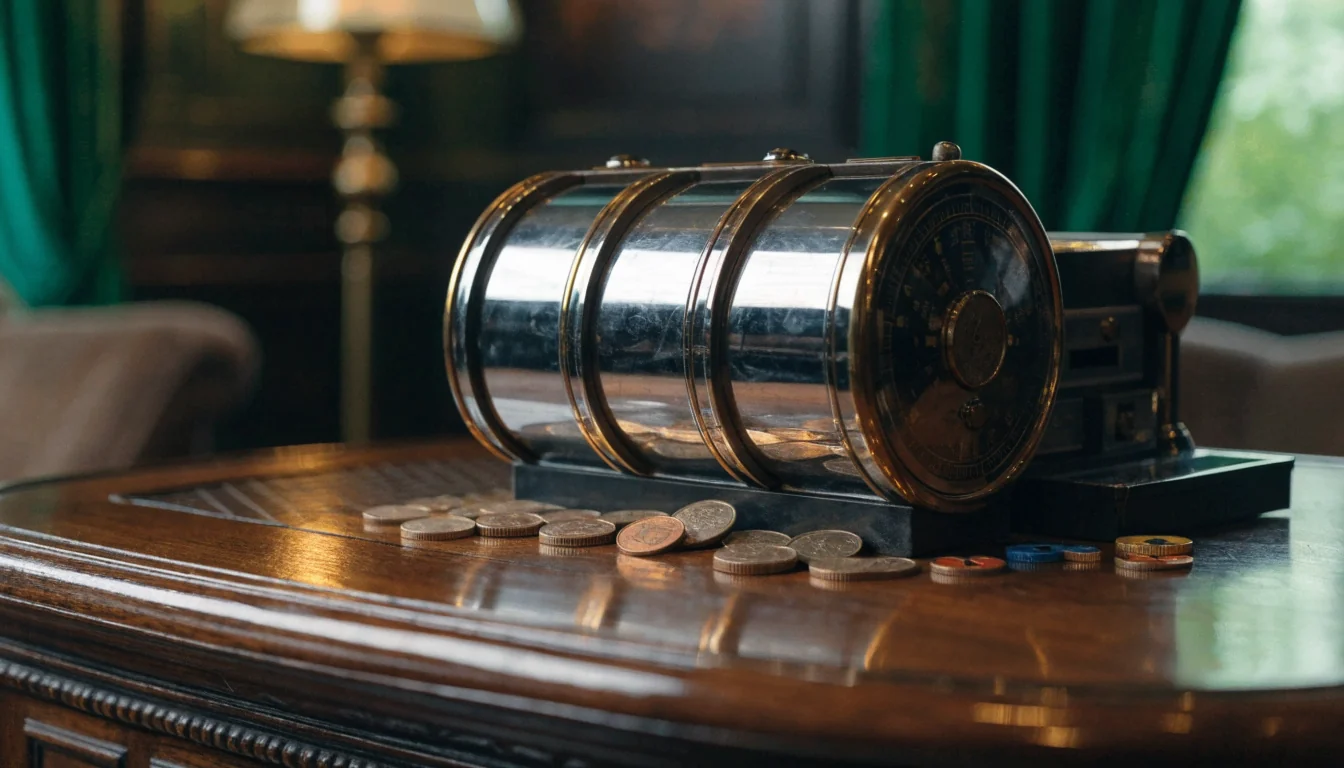
The screen can make a game look simpler than its rules are. Check whether the chosen bet changes the stake across the whole game or only affects particular parts of it, and whether the paytable describes wins at the selected stake. If a game has several bet settings, compare the displayed rules at the setting you intend to use rather than assuming every setting works identically.
For slots with a buyable bonus, the most useful comparison is therefore not just the button or feature label. It is the combination of reel layout, win conditions, stake presentation and bonus rules. That gives you a clearer picture of the game you are choosing without assuming that similar-looking slots share the same structure.
Bonus-Buy Slots and the Cost of a Feature
A bonus buy can look appealing because it lets you pay to enter a feature rather than wait for it to appear during ordinary play. That changes when you reach the feature, not the basic financial risk: the stake is still money committed to a game whose outcomes are uncertain.
It helps to separate the price of entry from the value of a possible result. Paying for access does not mean you are buying a win, a return of the stake or a particular prize. The feature may produce an outcome worth more than the cost, less than it, or nothing that offsets the amount spent. Treat the price as a wager, not as the purchase price of a guaranteed reward.
Financial Risk
Treat the bonus buy price as a wager rather than a purchase of a guaranteed reward; there is no dependable outcome that turns the purchase into a safe shortcut.
The relevant question is therefore not simply whether the feature looks attractive. Consider what you would be willing to lose on that attempt, and whether spending that amount fits your budget for gambling. If the cost feels acceptable only because you expect the feature to pay it back, that expectation can make it harder to judge the risk clearly. There is no dependable outcome that turns the purchase into a safe shortcut.
A house edge is the mathematical advantage built into a game in the operator’s favour. It describes the game’s long-run economics, not what must happen in an individual round or session. A player may finish ahead for a time; that does not cancel the underlying advantage. For every game with a positive house edge, the mathematical expectation is negative over enough sessions, however slowly losses may accumulate.
That point matters especially when a feature can be entered repeatedly. Each purchase is another stake exposed to the game’s terms. A favourable result does not make the next purchase more likely to succeed, and an unfavourable result does not mean a win is due. Neither a short run of good outcomes nor a gradual series of small losses changes the expected direction over enough play.
Before spending, set a firm amount you can afford to lose and stop when it is gone. Do not increase it to recover a previous loss, and do not treat a bonus feature as a way to improve the underlying odds. If you find yourself considering another purchase mainly because the last one did not pay, stepping away is more useful than trying to make the session come out even.

Bonus-buy slots can offer a more direct route to a feature, but direct access is not the same as better value. The cost is part of the gambling risk, and the house edge remains. A sound decision is one that accounts for both the attraction of reaching the feature and the possibility that the stake will not come back.
Free Play, Real Stakes and Great Britain’s Slot Limits
A free-play version of a bonus-buy slot lets you try the game without risking money. The balance shown is fictional: it is not a deposit or a cashable credit, and demo play does not award real-money payouts. A feature reached in practice mode may be entertaining to explore, but it cannot produce winnings you can withdraw.
That distinction matters when comparing free play with real-money slots. In a demo, the displayed balance has no monetary value. When you wager real money, each game cycle involves a stake, and any outcome is part of gambling rather than a rehearsal with cash prizes. The same-looking screen can therefore represent two very different activities.
A specialist review reports age-based limits on online slot stakes in Great Britain. For a customer aged 25 or older, the maximum stake is £5 in a game cycle; for someone aged 18 to 24, it is £2. These are limits on the amount staked in a cycle, not a promise about what a game will return. They also do not turn a demo into real-money play: no stake is being risked in a free version, and no payout is due.
UK Stake Limits by Age
For customers aged 25 or older, the maximum stake in a game cycle is £5. For those aged 18 to 24, the maximum stake is £2.
The age bands are worth keeping clear. Someone who has not yet reached 25 falls under the lower cap, while the higher cap applies from age 25 onwards. A bonus-buy option does not remove the applicable limit. Whether the game is entered through ordinary spins or through a paid feature, real-money play remains subject to the relevant stake restriction for that customer.
Free play can help you understand what appears on screen, but it cannot show what it feels like to lose money or receive a real payout. Nor should a successful demo round be treated as evidence that a real-money session will behave in the same way. Practice mode uses fictional funds and produces no cash winnings; real-money play carries financial consequences.
So, if you want to try bonus-buy slots for UK players without wagering, choose a free-play version and treat its balance strictly as play money. If you move to real stakes, the age-based Great Britain cap applies to each game cycle. The distinction is simple, even if the interface makes the two modes look similar.
Playing Online: Limits and Account Controls
A bonus-buy option may make a slot feature available at a chosen point, but it does not remove the need to decide how much you can afford to spend. Before depositing, check the account controls that apply to your play and set a financial limit that fits your budget. The operator must give new customers a prompt to set a limit before they make their first deposit; this is a safeguard, not a recommendation to deposit.

The limit should be something you can keep to without relying on a win to make the figures work. If your circumstances change, use the account settings to review it. Remote gambling operators serving customers in Great Britain are required to make account-level limit controls accessible, so you should be able to find them without having to search through unrelated game menus. The available controls and how they are presented can vary by operator.
Treat a limit as a boundary, rather than a target. A slot’s bonus-buy price can make it tempting to spend more quickly than ordinary spins would, but the account controls are there to help you manage your overall gambling funds, not to make a particular feature affordable. Do not raise a limit simply to continue playing after reaching it. If you find that you are repeatedly changing the amount to keep playing, taking a break is a more useful response than adjusting the setting again.
A financial limit is different from the legal cap on an individual online slot stake. One applies to your account spending; the other concerns the stake for a game cycle. They serve different purposes, so a personal account limit should not be treated as a substitute for knowing the rules that apply to a slot.
Do
- Set a financial limit that fits your budget before depositing.
- Use account-level controls to manage your overall gambling funds.
- Use operator tools to pause or restrict play if needed.
Don’t
- Rely on a win to make your financial figures work.
- Raise a limit simply to continue playing after reaching it.
- Open multiple accounts to work around a chosen limit.
In Great Britain, remote gambling businesses that offer services to consumers must be licensed by the UK Gambling Commission, even when their equipment is located elsewhere. That oversight does not make a limit a guarantee against loss: it gives you a control to use, while the decision to stop remains yours. Check that account settings are clear before you deposit, and avoid treating a bonus-buy feature as a reason to set a higher limit.
If you cannot keep to the limit you have chosen, do not try to work around it by opening another account or switching to another site. Use the operator’s available account tools to pause or restrict your play, and seek support if gambling is affecting your finances or wellbeing.
Game Volatility and What a Session Can Feel Like
Volatility describes how wins tend to be distributed across a slot’s results. It is not a measure of whether a game is likely to pay you overall, and it cannot tell you what will happen in a particular session. Two bonus buy slots can offer very different patterns of wins even if both have a feature you can enter by paying.
A lower-volatility game tends to return smaller wins more often. Across most titles, winning combinations typically appear every three to six spins on average. That describes a broad pattern, not a schedule: a run of spins can pass without a win, and a combination does not have to produce a return that matches your stake. The average also does not mean that wins arrive at regular intervals.

Higher-volatility slots tend to pay less often, with larger wins when they do pay. That can make play feel uneven: a longer stretch without a meaningful win may be followed by a bigger result, but neither the wait nor the size of any result is assured. A game’s volatility describes possible distribution, not a promise that a large win will eventually arrive.
This distinction matters when comparing buy bonus slot games in the UK. The option to enter a bonus round does not change what volatility means, or make the round’s outcome predictable. A bonus can produce a small return, a larger one or no return that offsets what was staked. The game’s volatility gives context for the style of results you might encounter; it does not tell you whether buying into a feature is likely to be worthwhile.
If you prefer results that are more frequent but generally smaller, a lower-volatility slot may feel less abrupt. If you are comfortable with less frequent payouts and greater swings, a higher-volatility title may feel more erratic. Neither pattern is inherently better, and a short session may look very different from the broad tendency described by a game’s volatility.
Treat the label as a description of how outcomes can be spread, not as a forecast. It cannot remove randomness or make one session representative of the next. The same caution applies when browsing new bonus buy slots in the UK: the feature may be appealing, but volatility alone cannot predict what you will get from it.
Volatility
A description of how wins tend to be distributed across a slot’s results, ranging from frequent smaller wins (low volatility) to less frequent but potentially larger wins (high volatility).
Which Slot Features Can You Buy Into?
A bonus buy is not a standard button found on every slot. It is an optional feature built into particular games, so the answer to “what slots can you buy a bonus on?” depends on the individual game. Two slots from the same provider may offer different features, and a familiar bonus round does not automatically mean you can pay to enter it.
The game’s information panel is the clearest place to check. Look for a section describing bonus features or special options, and see whether it explicitly says that a feature can be purchased. If the rules describe only ways to trigger a round through play, do not assume a buy option exists. Game menus and labels differ, so read the explanation rather than relying on a button’s appearance.
The bonus itself can also vary. One game may offer entry to a free-spins round; another may make a different feature available. The fact that a slot has free spins, multipliers or another bonus does not, by itself, establish that any of those features can be bought. The purchase option needs to be stated for that game.
The game’s wider structure gives context, but it does not identify a buyable bonus on its own. Low-volatility slots typically have five reels and at least twenty-five paylines, with fixed jackpot amounts rather than progressive pools. Their bonus rounds may use multipliers on wins accumulated during play. Those characteristics describe a common structure for that volatility category; they are not a promise that a slot includes a purchase option.

So, when comparing slots you can buy a bonus on, treat the feature as a specific game rule, not a general property of a slot type, reel layout or provider. Check the title’s own rules for the feature’s name and whether it can be purchased. If the game does not clearly describe a buy option, regard it as unavailable rather than inferring one from a bonus symbol or promotional description. This keeps the distinction clear: a slot may have a bonus round without offering a way to buy into it.
Where Bonus Buys Fit—and Where They Do Not
A bonus buy belongs to a particular slot’s feature set; it is not a standard option across casino games. If you are looking for slots where you can buy a bonus, the relevant question is whether that individual game offers a paid route into a bonus round. Another slot may require ordinary spins to reach its features, while a game with a buy option may provide a separate entry method. The label “casino game” alone tells you nothing about whether a bonus buy is available.
Roulette and blackjack are different kinds of casino games, not online slots. They have their own rules and ways of placing bets, but that does not make them games with slot-style bonus buys. Searching for casino games where you can buy a bonus can therefore blur two categories: the feature applies to certain slots, not to roulette or blackjack as a general class.

This distinction also matters when considering stake rules. A specialist review reports that Great Britain’s online slot stake limits do not apply to roulette or blackjack. That is a distinction between game categories, not a reason to treat those table games as alternatives with a buyable slot bonus.
When comparing games, look for the feature within the slot itself rather than assuming it is available throughout a casino’s catalogue. A casino may offer slots, roulette and blackjack on the same site, but shared access does not mean shared mechanics. If a game’s description does not identify a bonus-buy option, its presence in a casino’s slot section is not enough to establish that you can purchase entry to a feature.
Published by the Rainbow Riches Casino 5 team.